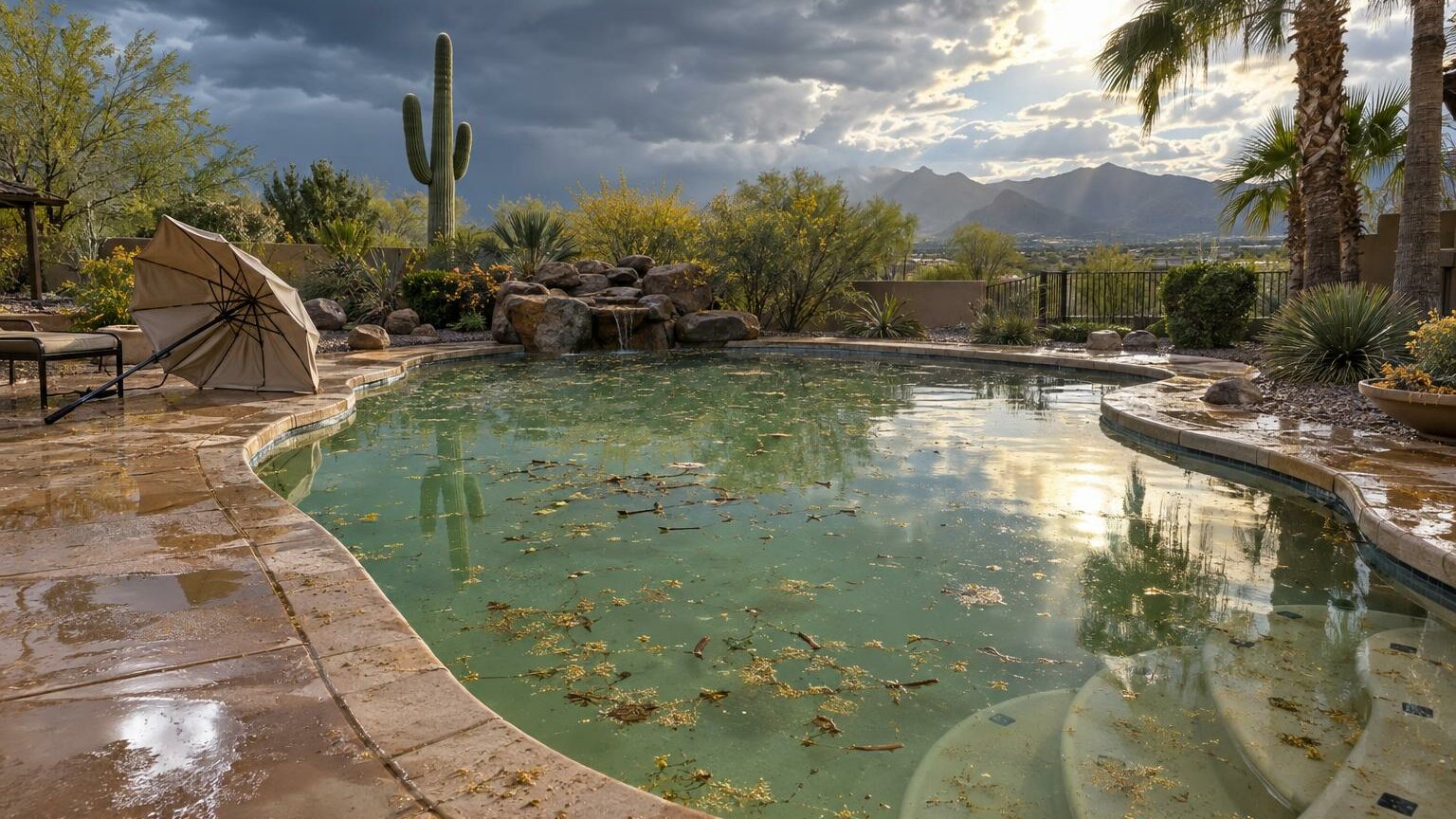
Every summer we get the same call. “It was fine on Friday. We had a storm Saturday night, and now the pool is green.” If that sounds familiar, you’re not alone. Monsoon storms are one of the most common reasons Phoenix pools turn green, and it can happen in a day or two.
The good news is you can stop most of it if you act fast. Here’s what a monsoon storm does to your pool, why it turns green so quickly, and what to do the morning after.
What a Monsoon Storm Does to Your Pool
Monsoon season in Arizona runs from mid-June through the end of September. The storms don’t last long, but they hit hard. In under an hour, your pool can take on:
- Dust and dirt. A dust storm (the kind people call a haboob) can coat the whole surface in brown silt. A lot of it sinks to the floor.
- Leaves, twigs, and seed pods. High winds strip trees and blow yard waste into the water. Palo verde, mesquite, and palm debris are the usual suspects.
- Rain runoff. Heavy rain washes dirt, lawn fertilizer, and whatever is on your deck straight into the pool.
- Power outages. If the power blinks or a breaker trips, your pump stops. Water that isn’t moving isn’t being filtered or sanitized.
On top of that, the heat comes right back after the storm passes. It’s not unusual to see 110 degrees the next afternoon.
Why It Turns Green So Fast
Algae is always trying to grow in your pool. The only thing holding it back is chlorine. A monsoon storm tips the balance in a few ways at once.
Chlorine gets used up. Every leaf, bug, and speck of dirt uses up some of your chlorine. A pool full of storm debris can burn through a whole week’s worth overnight.
Algae rides in on the dust. Algae spores float around in dust and rain. A dust storm drops millions of them right into the water.
Fertilizer feeds it. Runoff from lawns and planters carries phosphates and nitrates. Those are plant food, and algae is a plant.
The pump may be off. If the storm knocked out power or tripped a breaker, nothing is filtering the water. Dead spots form, and algae grows fastest there.
Then it gets hot. Warm water is where algae grows best. Once your pool water hits the upper 80s and 90s, a small patch of algae can take over in a day.
Put all of that together and it’s easy to see how a clear pool turns green by Monday.
What to Do the Morning After a Storm
Wait until the storm has fully passed. Never go near the pool or the equipment during lightning. Once it’s safe, work through this list.
1. Make sure the pump is running
Walk out to the equipment pad first. If the pump is off, check the breaker and the timer. Power blips can reset some timers to the wrong time. If a breaker keeps tripping, leave it off and call a pro. Water and electrical problems are not something to guess at.
2. Empty the skimmer and pump baskets
After a storm, these fill up fast. A packed basket chokes the water flow, and a pump running without enough water can overheat and get damaged. Empty them before anything else.
3. Skim out the big stuff
Use a leaf net to pull out leaves, twigs, and anything floating. The more you get out now, the less chlorine gets wasted.
4. Check the water level
A big storm can raise the water above the middle of the skimmer opening. When that happens, the skimmer can’t pull debris off the surface. If your water is too high, lower it with the drain setting on your filter or a submersible pump. Check your local rules on where you can drain pool water.
5. Brush the walls and floor
Brushing loosens dirt and algae so the chlorine and filter can do their job. Pay extra attention to corners, steps, and behind ladders, where water moves the least.
6. Test and shock
Test your chlorine and pH. After a storm, chlorine is almost always low. Shock the pool to bring it back up. Do this in the evening if you can, since the sun burns off chlorine fast during the day. Keep the pump running.
7. Run the pump longer
For the next day or two, run the pump longer than usual so the water keeps moving through the filter. Check the filter pressure too. If it’s much higher than normal, the filter is clogged with dust and needs a cleaning.
Mistakes We See After Storms
A few things make a storm-hit pool worse:
- Vacuuming a heavy layer of silt through the filter. Fine dust can pass right back through the filter or clog it. If there’s a thick layer on the floor, it’s often better to vacuum to waste, or call someone who can.
- Adding chemicals without testing. Guessing can throw your pH way off. Test first.
- Waiting a few days to deal with it. In Phoenix summer heat, a few days is all algae needs.
- Leaving the pump off to save power. Moving water is your best defense after a storm.
Getting Ready Before Monsoon Season
A little prep in early June makes storm cleanup a lot easier.
- Trim trees and bushes that hang over the pool.
- Clean the filter so it starts the season with room to catch dust.
- Balance the water, including stabilizer (cyanuric acid). Stabilizer helps chlorine last longer in the sun.
- Tie down or put away patio furniture, umbrellas, and pool toys. Umbrellas end up in pools every year.
- Know where your breaker is for the pool equipment, and how to reset the timer.
If you’re on weekly service, your tech should already be doing most of this. Ask them about it.
Storms Hit Some Areas Harder
Where you live makes a difference. In the West Valley, around Goodyear and Surprise, there’s still a lot of open land and farm fields. Dust storms there can bury a pool in silt. In North Phoenix, homes that back up to washes and open desert catch a lot of blowing sand and brush. Older neighborhoods with big trees, like parts of Central Phoenix, get more leaves and branches.
What About the Pool Equipment?
Storms don’t just dirty the water. They can hurt your equipment too.
Check for water around the equipment pad. Heavy rain can flood low spots. If water got into the pump motor or the timer box, don’t turn it back on. Have it looked at first.
Listen to the pump. A pump that ran dry with a clogged basket can come back noisy. Grinding or screeching after a storm usually means the pump got hurt.
Look at the heater. If you have a gas heater, make sure the vents aren’t blocked with leaves or debris.
Check your pool lights. If a light starts tripping the breaker after a storm, leave it off. Water may have gotten into the fixture.
Anything electrical after a storm is worth a call to a pro. It’s not worth the risk.
When to Call for Help
You can handle a light storm on your own. Call a pro if:
- The pool is already green or cloudy and you can’t see the bottom
- The pump won’t start, or a breaker keeps tripping
- There’s a thick layer of mud or silt on the floor
- You shocked it and it’s still green two days later
Our green pool cleaning service handles exactly this. We test the water, shock it, brush it, clean the filter, and keep at it until the water is clear. Then we follow up to make sure it stays that way. If the storm damaged your pump or electrical, our repair team can take care of it too.
Common Questions
How long after a storm does a pool turn green?
In summer heat, it can start within 24 to 48 hours. That’s why the morning after matters so much.
Can I swim after a monsoon storm?
Wait until you’ve cleaned out the debris, tested the water, and the chlorine is back in the normal range. If you shocked the pool, give it time for the chlorine level to come back down before anyone swims.
Why is my pool cloudy after a dust storm but not green?
That’s fine dust hanging in the water. Your filter will catch most of it over a day or two if the pump keeps running. Clean the filter when the pressure goes up. If it stays cloudy after a few days, have the water tested.
Should I cover my pool during monsoon season?
Most Phoenix pools don’t have covers, and that’s fine. Staying on top of cleanup after each storm works just as well.
Will weekly pool service handle storm cleanup?
Your weekly visit will catch up on it. But if a big storm hits the day after your visit, waiting six days is too long. Our customers call us, and we come out and clear it before it turns. Our weekly pool cleaning page has more on how that works.
The Bottom Line
Monsoon storms are part of summer here. You can’t stop them, but you can keep them from ruining your pool. Get the pump running, empty the baskets, skim, brush, and shock the same day. If the pool gets away from you anyway, give us a call at (623) 526-4945 or request an estimate online. We serve the whole Valley from five offices.