Muriatic acid is the most common way to lower pH and total alkalinity in a pool. Most Phoenix pools need a little of it every week or two, because our tap water, the heat, waterfalls, and salt cells all push pH up. The goal is pH between 7.2 and 7.8 and alkalinity between 80 and 120 ppm. Add the acid slowly in front of a return jet with the pump running, use less than you think you need, and test again a few hours later.
That’s the short version. The rest of this post covers how much to use, how to keep from getting hurt, and the mistakes that cost people a heater or a plaster finish.
What’s in the Jug
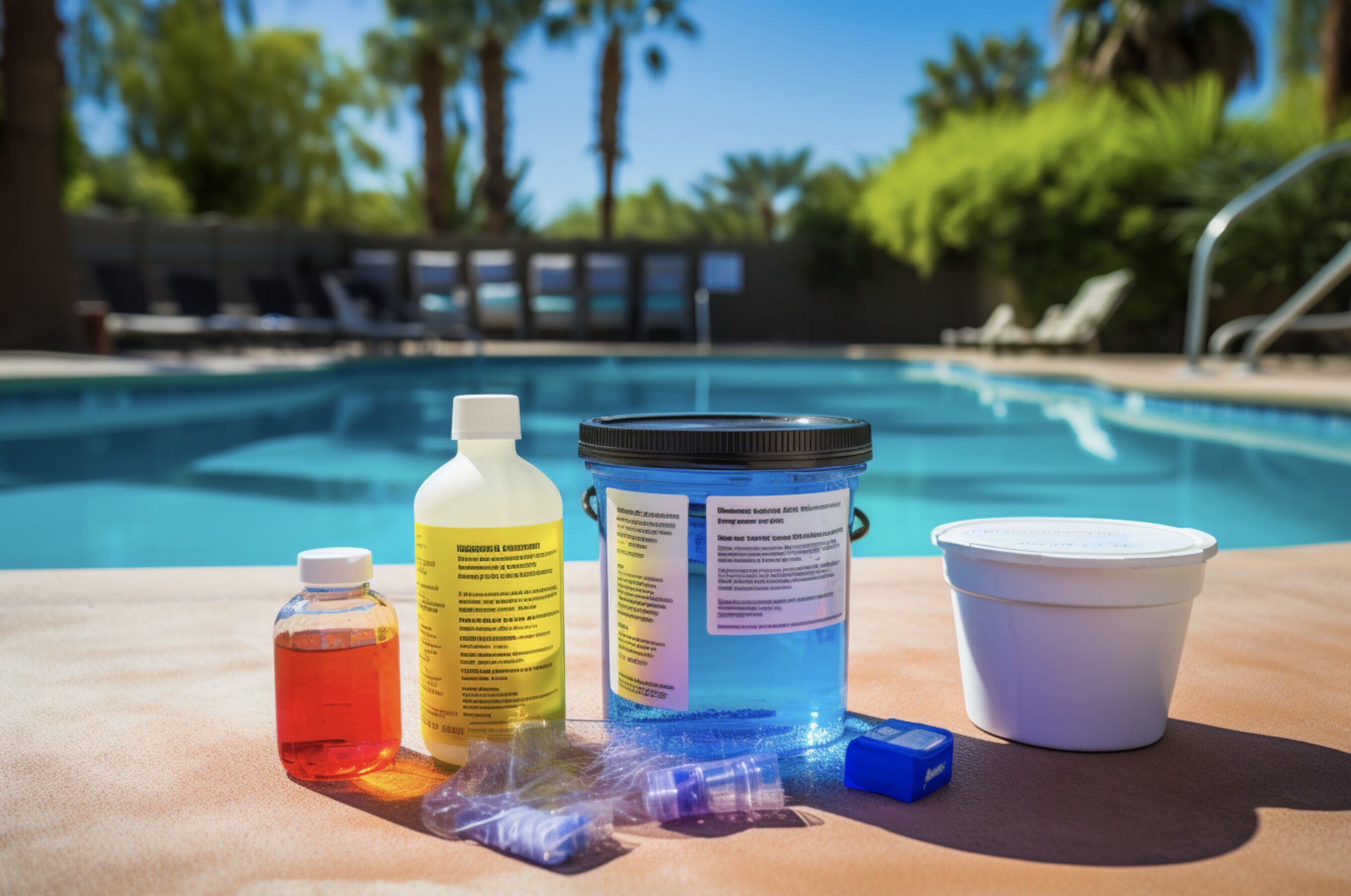
Muriatic acid is a form of hydrochloric acid. The jugs sold at pool stores and hardware stores are usually 31.45% strength, sometimes labeled “20 Baumé.” That’s the strength every dose in this post is based on.
You’ll also see “half strength” or “low fume” acid. It’s easier on your nose, but you need about twice as much to do the same job. Check the label so you know which one you have.
Acid does two things in a pool. It lowers pH, and it lowers total alkalinity. You can’t do one without moving the other a little. That matters later when we talk about fixing alkalinity.
Why Phoenix Pools Eat So Much Acid
If you moved here from somewhere else, you may wonder why your pool needs acid so often. A few things work against you in the Valley:
- Tap water. Our fill water often comes in with alkalinity on the high side, plus a lot of calcium. Every time the auto fill tops off the pool, it adds more.
- Heat and sun. Warm water loses carbon dioxide, and that pushes pH up. Our post on how Arizona heat affects pool water goes deeper on this.
- Evaporation. Water leaves, minerals stay. Then fresh water brings in more.
- Waterfalls, spillways, and bubblers. Anything that splashes or churns the water raises pH faster.
- Salt cells. A salt system makes chlorine, and the process pushes pH up every hour it runs. Salt pools often need more acid than chlorine pools.
- New plaster. A freshly plastered pool pushes pH up hard for the first few months.
So if you’re adding acid every week, that’s normal here. It doesn’t mean something is broken.
Test First, Then Add
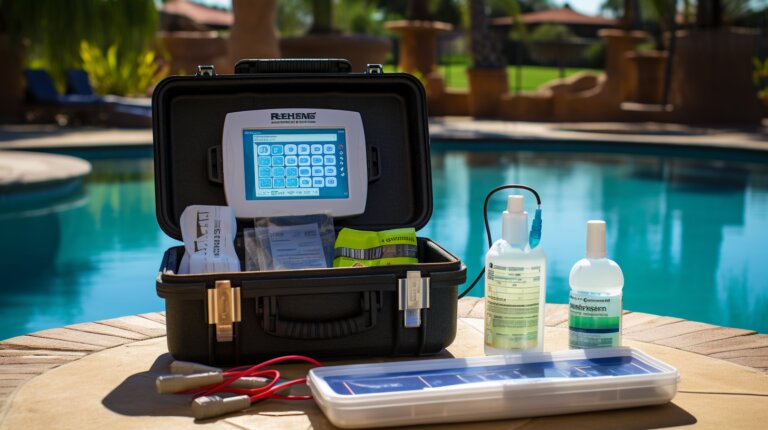
Never add acid on a guess. Test the water first. A good drop test kit or a digital tester is better than strips when you’re working on pH and alkalinity, since strips are hard to read between colors.
These are the same target ranges our techs use on every visit, from our weekly pool service report:
| Test | Target range | What happens when it’s high |
|---|---|---|
| pH | 7.2 to 7.8 | Chlorine works poorly, water clouds, scale forms |
| Total alkalinity | 80 to 120 ppm | pH keeps climbing and won’t stay put |
| Calcium hardness | 200 to 400 ppm | Scale on tile, in the heater, and in the salt cell |
High pH and high calcium together are what cause most of the white crust you see at the waterline on Valley pools. Keeping pH in range is the cheapest scale protection you can buy.
Safety Before You Open the Jug
Muriatic acid burns skin and eyes, and the fumes can hurt your lungs. Take it seriously every time:
- Wear chemical splash goggles and rubber gloves. Sunglasses don’t count.
- Wear long sleeves and closed shoes. Acid on bare feet is a bad day.
- Stand upwind and don’t lean over the jug when you open it.
- In summer, open the cap slowly and point it away from you. A jug that sat in a hot garage builds up pressure.
- Never mix acid and chlorine. Not in a bucket, not in a scoop, not poured in at the same spot. Together they make chlorine gas. Add one, wait a few hours, then add the other.
- If you dilute it, always add acid to water. Never pour water into acid.
- Keep kids and pets inside until you’re done.
If acid splashes on your skin, rinse it with lots of water right away. If it gets in your eyes, flush with water for 15 minutes and get medical help.
How to Add Muriatic Acid to a Pool
Here’s the safe way to do it, step by step:
- Test the pH and alkalinity, and write the numbers down.
- Figure out your dose (see the next section). Start with less than the full amount.
- Make sure the pump is running and the water is moving.
- Turn off the waterfall or spa spillover so the water near you is calm.
- Stand at the deep end, in front of a return jet.
- Pour the acid slowly, close to the water surface, so it doesn’t splash. Some people pour it into a bucket of pool water first, then pour that into the pool. Either way works.
- Rinse the jug cap and your measuring cup with pool water.
- Brush the floor where you poured, so no acid sits on the plaster in one spot.
- Let the pump run at least 4 hours, then test again.
- If you’re still high, add another small dose.
Don’t pour acid into the skimmer. It goes straight through your pump, filter, and heater before it mixes. Strong acid eats the copper tubes inside a gas heater. Do that week after week and the heater fails early, and a heater repair costs a lot more than a gallon of acid.
How Much Acid Do You Need?
The right amount depends on your pool size, your pH, and your alkalinity. Here’s a reliable starting point for lowering alkalinity, using full-strength 31.45% acid:
| Pool size | To lower alkalinity about 10 ppm |
|---|---|
| 10,000 gallons | About 26 ounces (a little over 3 cups) |
| 15,000 gallons | About 38 ounces (a little under 5 cups) |
| 20,000 gallons | About 51 ounces (about 6½ cups) |
For pH, it takes less. In a 15,000-gallon pool with alkalinity around 100, bringing pH down from 8.0 to about 7.5 often takes 3 to 4 cups. From 7.8, it takes about half that. Higher alkalinity means more acid for the same pH drop.
These are starting points, not exact numbers. Water is different from pool to pool. Add about two thirds of what you think you need, wait, and test. You can always add more. Taking acid back out means adding other chemicals.
Don’t know your pool size? Most Phoenix backyard pools fall somewhere between 12,000 and 20,000 gallons. If you’re not sure, guess low.
Lowering Alkalinity Without Crashing the pH
This is where people get stuck. Alkalinity is what holds your pH steady. When it’s high, pH keeps drifting up no matter how much acid you add. So you have to bring alkalinity down.
The trick is that acid lowers both numbers, but you can raise pH back up without raising alkalinity. Air does it. Here’s how:
- Add acid to bring pH down to about 7.2. Don’t go below 7.0.
- Run the pump and turn on anything that splashes: waterfalls, spillways, bubblers. Point your return jets up so they break the surface.
- Over the next day or two, the splashing pushes pH back up while alkalinity stays lower.
- Test. If alkalinity is still high, do it again.
It takes a few rounds, often a week or more. Go slow. Dropping pH too low to rush it can etch plaster and hurt metal parts.
Dry Acid vs Muriatic Acid
Dry acid (sodium bisulfate) is a granular product sold as “pH down” or “pH minus.” It does the same basic job.
| Muriatic acid | Dry acid | |
|---|---|---|
| Form | Liquid | Granules |
| Fumes | Yes, strong | Very little |
| Cost for the same job | Lower | Higher |
| Easy to store | Needs care | Easier |
| Long-term side effect | None to speak of | Adds sulfates that build up |
Dry acid is fine for small jobs, spas, or if the fumes bother you. For a big Phoenix pool that needs acid most weeks, muriatic acid is cheaper. Heavy dry acid use over years adds sulfates to the water, and high sulfates can be hard on plaster.
Common Acid Mistakes
- Dumping the whole dose at once. You overshoot, pH drops too far, and now you’re adding soda ash to fix it.
- Pouring into the skimmer. Hard on the pump seals and the heater.
- Adding acid and chlorine at the same time. Dangerous, and the chlorine gets wasted.
- Chasing the numbers every day. Test, dose, wait. Testing again an hour later just leads to more guessing.
- Using acid to fix scale on the tile. Pouring acid at the waterline won’t take off hard calcium crust, and it can damage grout. That scale comes off with blasting media matched to the tile. Our pool tile cleaning page explains how we do it.
- Storing acid next to the pool equipment. The fumes rust metal. Pump clamps, screws, and electrical panels near an acid jug rust out fast.
What If pH Is Too Low?
It happens, usually after too much acid. Low pH water can sting eyes, etch plaster, and corrode heater copper and other metal parts.
To raise pH, use soda ash (sodium carbonate). To raise alkalinity, use baking soda (sodium bicarbonate). Add small amounts, with the pump running, and test again in a few hours. In Phoenix, low pH is far less common than high, so don’t buy a big bag.
Storing Acid in the Arizona Heat
A garage or shed in July can top 120 degrees. That’s hard on acid jugs. A few rules:
- Keep the jug in the shade, in the coolest spot you have.
- Keep it far from chlorine, and never stacked on top of it.
- Store it low, on the floor or a bottom shelf, inside a plastic tub in case it leaks.
- Keep it away from the pool equipment, tools, and anything metal.
- Keep the cap tight and the jug out of reach of kids.
Common Questions
Can I swim after adding muriatic acid?
Give it at least 30 minutes with the pump running so it mixes in. For a big dose, wait a few hours and test before anyone swims.
Will muriatic acid hurt my plaster?
Not when you add it right. Damage happens when strong acid sits on one spot, or when pH stays too low for days. Pour in front of a return, brush the spot, and keep pH at 7.2 or higher.
Does a salt pool need muriatic acid?
Yes, usually more than a chlorine pool. The salt cell pushes pH up the whole time it runs. High pH also speeds up scale on the cell, which is a big reason salt cells stop making chlorine in hard water.
My pool is cloudy. Should I add acid?
Maybe. High pH and alkalinity are common causes of cloudy water, but not the only ones. Test first. Our guide to why a pool turns cloudy walks through the other causes.
Is this the same acid used for an acid wash?
Same acid, very different job. An acid wash drains the pool and uses strong acid on the bare plaster to strip stains and scale. That’s not a DIY project. We handle it as part of our acid wash, drain, and refill service.
Rather Not Deal With It?
Our weekly techs test your water every visit and add acid as needed, so you never have to handle the jug. You get an emailed report after each visit, and the customer portal shows your chemistry and dosing history over time. If you’d rather do it yourself, ask about a pool school visit, where a tech walks you through your own system and shows you how to dose it.
For help with water balance only, see our chemical balancing service. Call (623) 526-4945 or request an estimate online.
NextGen Pool Care is licensed, bonded, and fully insured in Arizona. ROC #356379.