Sooner or later, every pool in the Valley needs fresh water. You can’t avoid it here. The question is when to do it, and how to do it without hurting your pool.
The short answer: drain a Phoenix pool between about October and April, and plan on doing it every two to three years. Avoid the summer, avoid stormy weeks, and test your water before you decide. The rest of this post explains why, so you can plan it right.
Why Arizona Pools Need to Be Drained at All
In a lot of the country, people can go ten years or more without draining their pool. Here, the water wears out much faster. Three things cause it.
Evaporation leaves minerals behind. When water evaporates, only pure water leaves. Everything dissolved in it stays in the pool. Calcium, salt, and other minerals get more and more concentrated every week.
Our tap water is already hard. Every time you top off the pool, you add more calcium. In summer, that can be an inch or more of new water every week. Each inch brings more minerals with it.
Chemicals add up. Chlorine tabs add stabilizer every time they dissolve. Stabilizer (cyanuric acid) helps chlorine last in the sun, but it doesn’t leave the water on its own. After a couple of years, it can build up so high that chlorine stops working well.
At some point the water is so loaded that you can’t balance it anymore. You add chemicals, and they don’t do what they’re supposed to. That’s when it’s time.
How to Know It’s Time
Don’t drain on a schedule alone. Drain when the water tells you to. A good water test is the best guide. Here are the signs we look for:
Calcium hardness is above 400 ppm and climbing. We keep calcium between 200 and 400 ppm. Above that, scale starts forming on tile, in the heater, and in the salt cell. You can slow it with good pH control, but you can’t really bring calcium down without new water.
Stabilizer is above 80 ppm. We keep cyanuric acid between 30 and 80 ppm. Above that, chlorine gets sluggish and algae can grow even with a normal chlorine reading. The only real fix is to dilute it with fresh water.
The water won’t stay balanced. If pH and alkalinity swing all over the place no matter what you add, the water may be worn out.
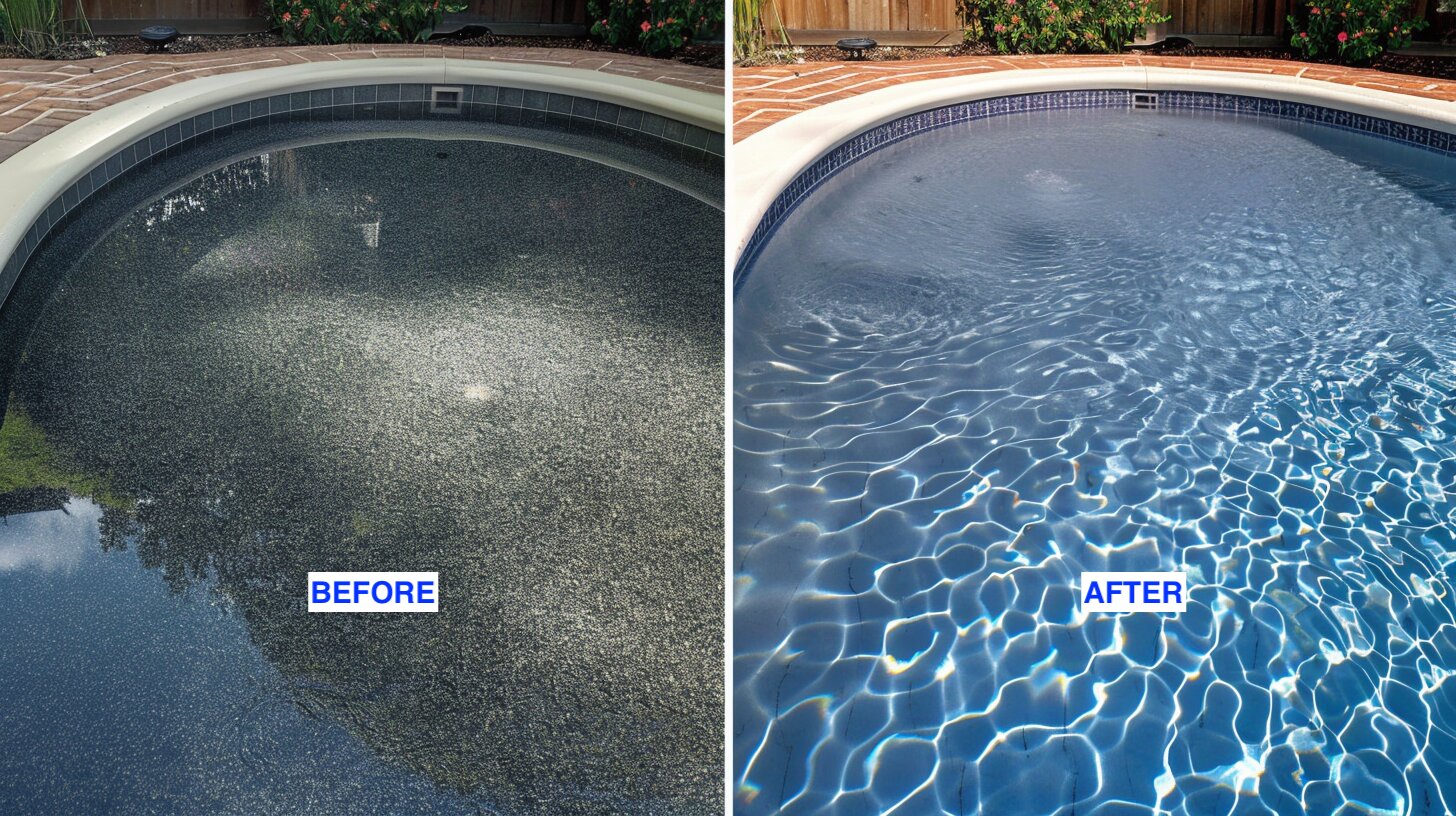
It looks dull. Old water often looks flat or slightly hazy even when the chlorine and filter are fine. Our post on cloudy pool water covers other causes to rule out first.
White crust keeps coming back. Scale on the tile line that returns right after it’s cleaned is a sign of high calcium.
If your pool is on weekly service, your tech is already testing these. Ask what the numbers look like.
The Best Months to Drain
| Months | Good time? | Why |
|---|---|---|
| October and November | Great | Cooler air, mild sun, and the summer chemicals are done |
| December to February | Good | Cool and stable, but new water feels cold for a while |
| March and April | Great | Mild weather, and the pool starts summer with fresh water |
| May | OK, early in the month | It heats up fast, so don’t wait too long |
| June to September | Avoid | Extreme heat, strong sun, and monsoon storms |
Fall and spring are the sweet spots. Spring is popular because you start swimming season with new water. Fall is popular because you clean out a summer of stabilizer and calcium buildup.
Why You Shouldn’t Drain in Summer
An empty pool in Phoenix summer is in trouble. A few reasons:
The sun can damage the finish. Plaster is meant to stay wet. In 110-degree sun, the surface can dry out fast, and that can lead to cracking, flaking, or rough patches. Tile grout dries out too.
The new water is harder to balance. Fresh water in summer heat burns through chlorine fast, and you’ll be fighting to get it started.
Monsoon storms bring risk. A pool that’s empty when a big storm hits can fill with muddy water and debris. And there’s a bigger danger, which we’ll cover next.
The Groundwater Problem
This is the part most owners don’t know about. A pool full of water is heavy, and that weight holds it in place. When you empty it, the shell is just a big concrete bowl sitting in the ground.
If the soil around the pool is soaked, the water in the ground pushes up on the bottom of the pool. In rare cases, that pressure can crack the shell or even lift the pool out of position. People call this “popping” a pool. It doesn’t happen often, but when it does, it’s a huge repair.
That’s why you shouldn’t drain right after heavy rain, during monsoon season, or if you’ve had a leak that soaked the ground. Many pools have a relief valve in the main drain that lets groundwater in to ease the pressure, but you shouldn’t count on that alone. Dry ground and mild weather make the job much safer.
Where the Water Goes
A typical backyard pool holds somewhere around 15,000 to 25,000 gallons. That water has to go somewhere, and you can’t just send it anywhere you like.
Each city in the Valley has its own rules. Many want pool water sent into the sewer cleanout at the house, not into the street or a storm drain. Pool water carries chlorine and other chemicals, and storm drains often lead straight to washes and canals. Check your city’s water department website before you start.
Also think about your neighbors and your yard. Draining onto the lawn or into the desert landscaping can flood a low spot or wash out soil next to the house.
Partial Drain or Full Drain?
You don’t always have to empty the whole pool.
A partial drain lowers the water a foot or two and refills it with fresh water. This can bring calcium and stabilizer down some without leaving the finish exposed. It’s a good choice when the numbers are only a little high, or when the pool is in good shape and you just want to buy some time.
A full drain swaps out all the water. This resets everything. It’s also a chance to clean the tile, scrub stains, and look the pool over while it’s empty. If the plaster has stains or scale, a full drain is often paired with an acid wash.
Your water test can help decide. If calcium is at 450 and you want it at 300, a partial drain may get you there. If it’s at 800, it’s time for all new water.
What to Do After the Refill
Fresh tap water isn’t ready to swim in. Here’s what needs to happen once the pool is full:
- Test everything. Check pH, alkalinity, calcium, and stabilizer. Fresh water in Phoenix still has a fair amount of calcium, so you’ll start somewhere in the middle of the range, not at zero.
- Balance in order. Get alkalinity into range first (80 to 120 ppm), then pH (7.2 to 7.8). Alkalinity helps hold pH steady.
- Add stabilizer. New water has none, and the sun will eat your chlorine without it. Aim for 30 to 80 ppm.
- Add chlorine. Get the free chlorine up to the right level for the season.
- Run the pump and brush. Brush the walls and floor for the first few days to help everything mix and settle.
If you have a salt pool, the salt has to go back in too. New water starts with no salt, and the cell won’t make chlorine until the level is right. We keep salt between 2,700 and 3,400 ppm.
Doing It Yourself
You can drain your own pool, but it’s a bigger job than it looks. Here’s what to think about:
- Turn off the pump and heater at the breaker before you start. A pump that runs with no water can burn up in minutes.
- Use a submersible pump. Don’t use your pool pump to drain the pool below the skimmer.
- Watch it the whole time. Draining takes most of a day. Check on it often.
- Don’t leave it empty. Start refilling as soon as you’re done cleaning. The less time the finish sits dry, the better.
- Know your city’s rules before the first gallon goes out.
If any of that makes you nervous, it’s a good job to hand off.
Common Questions
How often should a Phoenix pool be drained?
Every two to three years is common. Pools with lots of fill water, like ones with a waterfall, a leak, or heavy use, may need it sooner. Your water test is the real guide.
How long does it take?
Draining and cleaning usually take a day. Refilling depends on your water pressure and can take a day or more. Plan on two or three days total before you swim.
Will my water bill go up?
Yes, for that month. A full refill uses a lot of water. Some Valley cities have programs or advice for pool owners, so check your city’s water website.
Can I drain a pebble or quartz pool?
Yes, the same timing rules apply. No pool finish likes sitting empty in the summer sun.
Should I drain my pool before winter?
Not to close it, like people do back east. Phoenix pools stay open all year. But fall is one of the best times to drain and refill if your water is due.
Ready for Fresh Water?
If your water test says it’s time, we can handle the drain, the cleanup, and the start-up chemicals. See our acid wash and drain and refill page, check prices on our pricing page, or call (623) 526-4945.