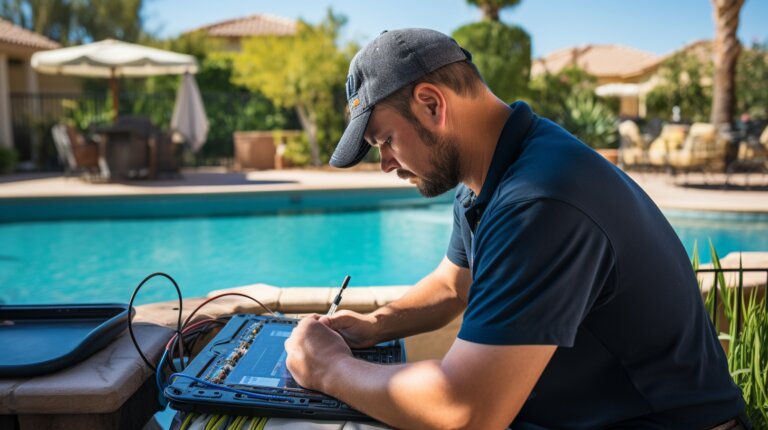
If you sell homes in the Phoenix area, a lot of your listings have pools. And when a pool is part of the deal, it’s usually the agent who books the pool inspection for the client. NextGen Pool Care does pool inspections for buyers and sellers across the Valley. One of our techs checks the pump, filter, heater, salt system, plumbing, lights, automation, water, and surfaces, then explains what we found and gives a quote for any repairs. This guide covers how to use a pool inspection on both sides of a deal, what we need from you to get it done on time, and the red flags you can spot at a showing.
Why the Home Inspection Isn’t Enough for the Pool
Your client’s home inspector has a whole house to get through. The pool is one line on a long list. Many inspectors check that the equipment turns on and stop there. Some leave the pool out of the report entirely. A lot of reports end the pool section with the same line: “recommend further evaluation by a qualified pool professional.”
That line doesn’t help your client decide anything. It doesn’t say what’s wrong, how bad it is, or what it costs. That’s where we come in. Our techs repair pool equipment all week. They know what a pump sounds like right before it fails, what scale looks like inside a heater, and which leak signs mean a quick fitting and which mean a bigger job.
For Buyer’s Agents: Peace of Mind Inside the Inspection Period
The inspection period on an Arizona resale contract is short, usually 10 days. Pool equipment is some of the most expensive stuff on the property, and it’s easy to miss.
Here’s what a pool inspection gives your buyer:
- A clear picture before they’re committed. They learn what’s fine, what’s wearing out, and what needs work now.
- Numbers to negotiate with. We give a quote for the repairs we find. That’s something real to put in the BINSR, whether your buyer asks for repairs or a credit.
- A sense of what’s coming. A 12-year-old heater that still works isn’t a repair item today, but your buyer should know it’s near the end of its life.
- Answers to their questions. Many buyers have never owned a pool. If they come to the inspection, they can ask a working pool tech anything.
Book it early. Call us the day the offer is accepted. If the inspection turns up a possible leak, a full leak detection is a separate visit, and you want room in the schedule for it.
For Listing Agents: Fix It Before It Becomes a Negotiation
Pool problems found by a buyer’s inspector tend to show up at the worst time, with a deadline and a nervous buyer. A pool inspection before you list puts your seller in control.
Find and fix issues before listing. A leaking pump seal, a dead light, or a heater that won’t fire are all fixable. Fixed before photos and showings, they never come up. Fixed after the BINSR, they can cost your seller more in credits than the repair itself.
Get a second opinion. If the buyer’s inspector flagged the pool, we can look at the same items and tell you what we see. Sometimes “pump is noisy” is a $200 bearing job. Sometimes the inspector was right and it needs a new pump. Either way, your seller can respond with facts instead of guesses.
Get a repair quote. When a buyer asks for pool repairs, a quote from a licensed pool company helps the seller decide: fix it, credit it, or push back. If the seller wants it fixed before closing, we can do the work.
Help with the disclosure. The SPDS asks sellers about the pool and its equipment. A seller who knows the condition of the equipment can answer those questions with confidence.
Vacant Homes, Estates, and Green Pools
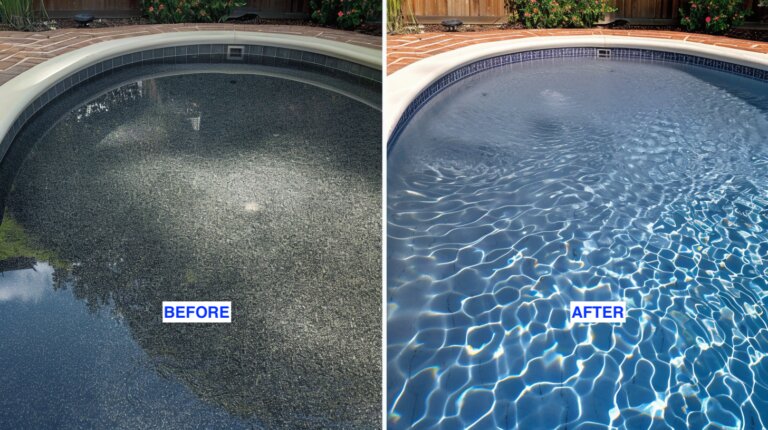
A lot of pool trouble shows up in vacant listings. The power gets shut off, the pump stops, and a few weeks later the pool is green. That’s hard on photos and on buyer confidence.
If a listing’s pool has turned, our green pool cleanup service can bring it back before you shoot photos. We follow up afterward to make sure it stays clear. For a listing that will sit vacant for a while, weekly service keeps it showing well until it sells.
For an inspection, the power and water need to be on and the pool needs to be full. We can’t test a pump that has no power, and a half-empty pool hides problems.
What We Need From You to Book
To get your inspection done inside the deadline, send us:
- The property address and your client’s name
- How we get in: lockbox, gate code, or who will meet us
- Your inspection deadline
- Whether the power and water are on
- Whether there are pets in the yard
- Who should get the findings and quote: your client, you, the other agent, or all three
- Whether your client wants to be there (they’re welcome, and most buyers learn a lot)
Make sure the equipment pad is reachable. Pads behind locked side gates, under stored furniture, or in an overgrown corner slow everything down.
Red Flags You Can Spot at a Showing
You don’t need to be a pool tech to notice trouble. If you see any of these, it’s a good sign to book a pool inspection:
- Green, cloudy, or very low water. Low water can mean a leak, or a pool that hasn’t been looked after.
- Wet ground or puddles at the equipment pad. Something is leaking.
- A pump that’s loud, screeching, or humming without running.
- Rust, white crust, or burn marks on the heater.
- A thick white line of scale on the tile. Common in the Valley, but heavy scale can point to years of poor water care.
- Air bubbles shooting out of the return jets. Often an air leak on the suction side.
- Cracks in the deck near the pool, or tiles popping off.
- An auto fill that seems to run all the time.
- Equipment that looks very old. Labels faded to nothing, rusted clamps, and patched pipes all tell a story.
What a Pool Inspection Covers (and What It Doesn’t)
We check the pump and motor, filter, heater or heat pump, salt system, automation, lights, cleaner, plumbing at the pad, water chemistry, and the plaster or pebble finish and tile. The full checklist is on our pool inspection page.
A few things are outside what we do:
- Resurfacing. We don’t replaster or resurface pools. If the finish is worn out, we’ll say so, and your client can get quotes from a resurfacing company.
- Barrier code compliance. Arizona and your city set the rules for pool fences and gates. We point out obvious problems we see, like a gate that won’t latch, but we don’t certify a barrier. For fence work, we refer clients to our partner Fence Pros Arizona.
- The rest of the house. A pool inspection doesn’t replace a home inspection. It goes deeper on the pool.
Home Warranties and Pools
Plenty of buyers assume a home warranty covers the pool. Often it doesn’t, or pool and spa coverage is a paid add-on with limits. If your buyer is counting on a warranty, have them read the pool section before closing. A pool inspection tells them what they’d likely be claiming on.
After Closing
Once your buyer moves in, we’re happy to keep taking care of the pool. Since we’ve already been through the equipment, we know the pool on day one. We can also do a pool school visit, where a tech shows the new owner how their system works: the pump schedule, the filter, the heater, and the automation.
There’s no obligation. Your client is free to use us for repairs or weekly service, or not. The inspection stands on its own.
Commercial and Multifamily Listings
We also look at pools for apartment communities, HOAs, and other commercial properties. These pools have more equipment and more rules to meet. See our commercial pool service page or call and tell us about the property.
Common Questions From Agents
Who should order the pool inspection, buyer or seller?
Either one. Buyers order it for peace of mind during the inspection period. Sellers order it before listing, or as a second opinion after a buyer’s inspection. We work for whoever books it.
Can you do repairs before closing?
Yes, if the schedule allows. Tell us the closing date when you book and we’ll be straight with you about timing. Parts for some equipment can take a few days.
What areas do you cover?
Phoenix, Paradise Valley, Scottsdale, Glendale, Peoria, Surprise, Goodyear, Sun City, Sun City West, and Anthem. See our service areas for the office closest to your listing.
Can we inspect a pool in the winter?
Yes. Winter is actually a good time to test the heater. Just keep in mind that cold water slows algae, so a pool can look better in January than it will in July. We test the water and check the equipment the same way all year.
Book a Pool Inspection
Call (623) 526-4945 or request an inspection online. Tell us your deadline up front and we’ll work to get you on the schedule in time.
A note on the word “inspection”: agents and clients call this a pool inspection, so we do too. It’s really a complete, detailed assessment of the pool and its equipment by working pool techs. It isn’t a licensed home inspection and doesn’t replace one.
NextGen Pool Care is licensed, bonded, and fully insured in Arizona. ROC #356379.