
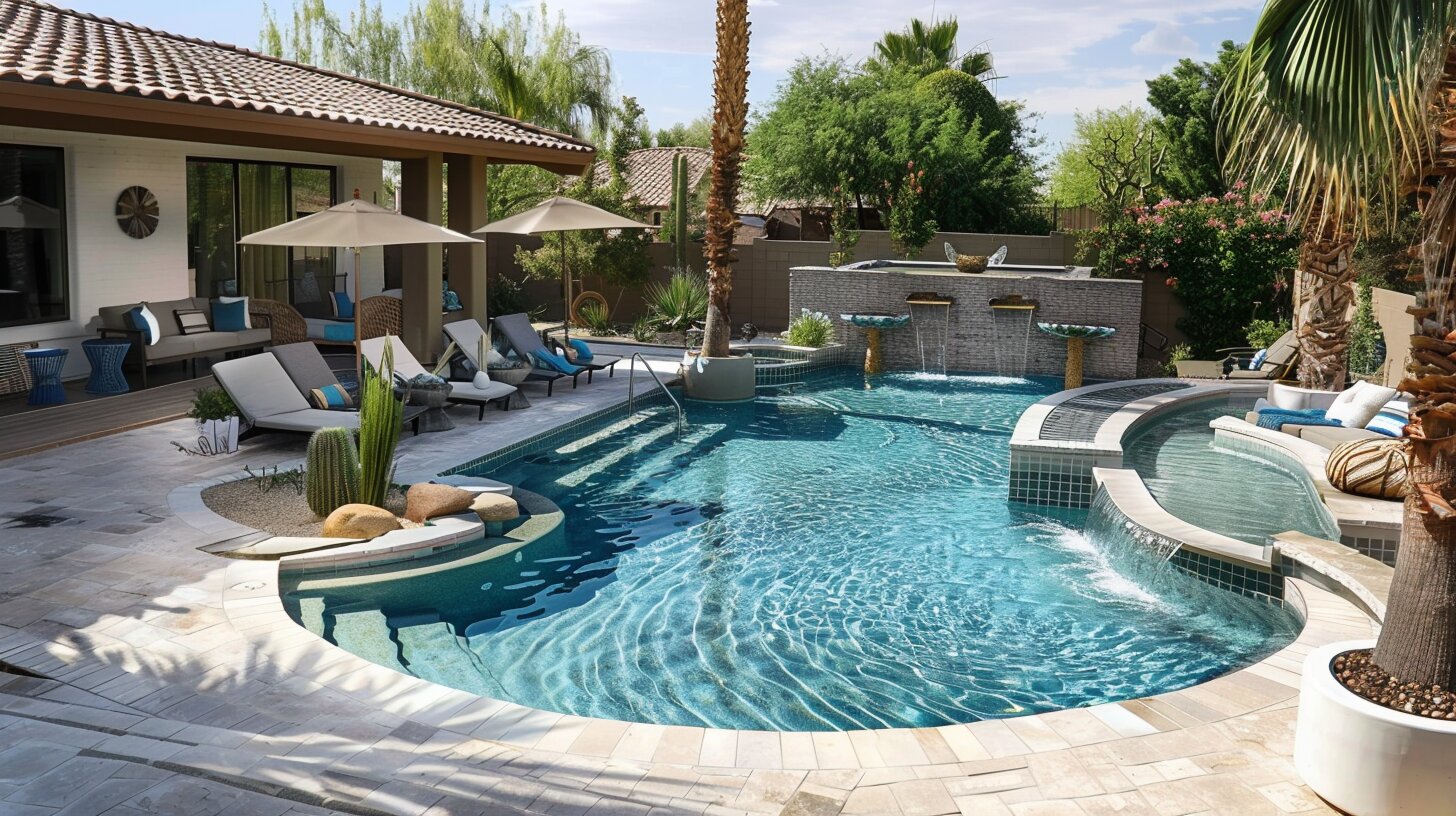
“How often does my pool really need to be cleaned?” It’s one of the first things people ask us. The honest answer for most Phoenix homes is once a week. Some pools need more, and a few can get by with less for part of the year. It depends on the heat, how much the pool gets used, what’s growing around it, and who’s swimming in it.
Here’s how we think about it, after years of cleaning pools all over the Valley.
The Short Answer
- Most family pools: once a week, all year.
- Short-term rentals like Airbnb: twice a week.
- Apartment, condo, and HOA pools: several times a week.
- Pools under big trees or near open desert: once a week at least, plus quick skimming in between during windy months.
Weekly is the normal baseline because of how fast things change in our climate. A pool can look perfect on Monday and be cloudy by Friday in July.
Why Phoenix Pools Need More Attention
People who move here from other states are often surprised by how much care a pool needs in Arizona. Back east, a pool might sit closed half the year. Here, pools stay open all year, and summer is brutal on them.
The sun eats chlorine
Strong desert sun breaks down chlorine fast. Without the right amount of stabilizer in the water, a pool can lose most of its chlorine in one afternoon. Once chlorine drops, algae gets a foothold. In 90-degree water, algae can go from a faint haze to a green pool in a few days.
Evaporation never stops
A Phoenix pool can lose a quarter inch of water a day in summer. When the water level drops too low, the skimmer pulls in air and the pump can run dry. Every time you top it off, the fill water brings in more calcium. So the water slowly gets harder, and the chemistry shifts every week.
Dust and debris
Dust storms, monsoon winds, palo verde blossoms, mesquite pods, palm fronds. Something is always blowing into the pool. All of that sinks, clogs baskets, and feeds algae. If it sits for two or three weeks, it stains the plaster and loads the filter.
What a Weekly Cleaning Should Cover
A real weekly visit is more than a quick skim. When we come out, we:
- Skim the surface and empty the skimmer and pump baskets.
- Brush the walls, steps, and tile line.
- Vacuum the floor when it needs it.
- Test the water and add the chemicals it needs.
- Check the filter pressure and clean the filter on schedule.
- Look over the pump, heater, and other equipment for leaks or odd noises.
- Check the water level.
After every visit, you get an emailed report showing the test results, the chemicals we added, and what we did. If you want to see what’s covered on each plan, it’s all on our weekly pool cleaning page.
When Once a Week Isn’t Enough
Vacation rentals
We recommend twice a week for Airbnb and other short-term rentals. Guests come to Arizona to swim, and they swim a lot, almost all year. A rental pool gets far more use than a family pool. Renters also don’t always treat a pool the way an owner would. More swimmers means more sunscreen and body oils in the water, and chlorine burns off faster. And a dirty pool in your listing photos or your reviews costs you bookings.
Shared pools
Apartment and HOA pools often need service several times a week. They have a heavy bather load and need to look good for residents every day, not just the day after the tech leaves. Our commercial pool service page explains how we set those schedules.
Busy family pools in summer
If you’ve got kids and their friends in the pool every afternoon in July, a weekly visit still works. But someone at home should skim the surface and check the chlorine between visits. We also offer twice-a-week service for homeowners who want the pool spotless all the time or who have a pool that gets dirty fast.
After a big storm
Monsoon storms can dump a week’s worth of dirt into a pool in an hour. If a storm hits a few days before your next visit, it’s worth a quick cleanup. Our post on what to do when your pool turns green after a monsoon walks through it.
Can I Go Every Other Week?
We get asked this a lot, usually by people trying to save money. Here’s the honest answer: in Phoenix, every other week is risky from about May through October. Two weeks is plenty of time for the chlorine to run out and algae to take over. Then you’re paying for a green pool cleanup, which costs more than the visits you skipped.
In the cooler months, a pool needs less chlorine and the water doesn’t change as fast. Some owners who are handy and test their own water do fine with less help in winter. But the equipment still needs checking, and the filter still fills up. Most of our customers keep weekly service all year because it’s simpler and they never have to think about it.
What You Can Do Between Visits
You don’t have to do anything if you don’t want to. That’s what we’re for. But a few small habits help a lot:
- Run the skimmer net over the top after a windy day.
- Empty the skimmer basket if it’s full of leaves.
- Keep the water level about halfway up the skimmer opening. If you have an auto-fill, make sure it’s working.
- Hose off the deck away from the pool, so dirt doesn’t wash in.
- Don’t add random chemicals. If something looks off, call us. Adding the wrong thing can make it harder to fix.
Not sure how your system works? We’re happy to show you. We call it pool school, and it takes about ten minutes on a visit.
How Often Should the Filter Be Cleaned?
This is a different question from how often the pool gets cleaned. In Phoenix, most cartridge and DE filters need a full cleaning every few months, more often during monsoon season. A good rule is to watch the pressure gauge. When it reads about 8 to 10 PSI higher than it does right after a cleaning, it’s time. Our filter cleaning and repair page has more on each filter type.
How Often Should the Water Be Tested?
At least once a week, and twice a week in summer if you’re doing it yourself. Chlorine and pH are the two numbers that change fastest. The others, like alkalinity, calcium, and stabilizer, change more slowly but still need checking. If you want to learn what the numbers mean, our post on pool chemistry basics covers each one.
How Often Should a Pool Be Drained?
Not often. Most Valley pools need fresh water every two to three years because of our hard water. The calcium and dissolved solids build up until the chemicals stop working well. Fall through spring is the best time to drain, since an empty pool in summer heat can damage the plaster.
How the Seasons Change Things
The work changes a lot from month to month in the Valley. Here’s roughly what we see:
| Months | What the pool is dealing with | What changes on our end |
|---|---|---|
| December to February | Cool water, little algae growth, some leaves | Less chlorine needed, pump run time cut back, heater checks |
| March to May | Water warming up, spring pollen and blossoms, more swimmers | More chlorine, more brushing, filter cleans as pollen loads up |
| June to September | Water in the 90s, strong sun, monsoon storms and dust | Most chlorine of the year, longer pump run times, extra storm cleanups |
| October and November | Water cooling off, swim season winding down | Chlorine tapers off, a good time for filter cleans and drains |
So even on a weekly plan, no two visits are quite the same. In winter a visit might be quick. In August, it’s a lot more work to keep the water clear.
Signs Your Pool Needs More Help
If you clean your own pool, or you’re on a plan with fewer visits, watch for these. They usually mean the pool isn’t getting enough care:
- The water looks dull or cloudy a few days after cleaning
- The walls feel slimy when you rub them
- Green or black spots show up in corners or on the steps
- The skimmer basket is full again a day or two after it’s emptied
- You can smell chlorine strongly, which usually means the chlorine is used up, not that there’s too much
- The tile line has a white or gray crust that keeps growing
Any of those is a good reason to step up how often the pool gets attention.
Ready to Hand It Off?
Call (623) 526-4945 or request an estimate. Residential service is month to month, so you can cancel any time. We’ll look at your pool and tell you honestly whether weekly is enough or whether it needs more.